

Creature Discovery Card
Explore the museum and find lots of creatures associated with autumn!
Explore the museum and find lots of creatures associated with autumn!
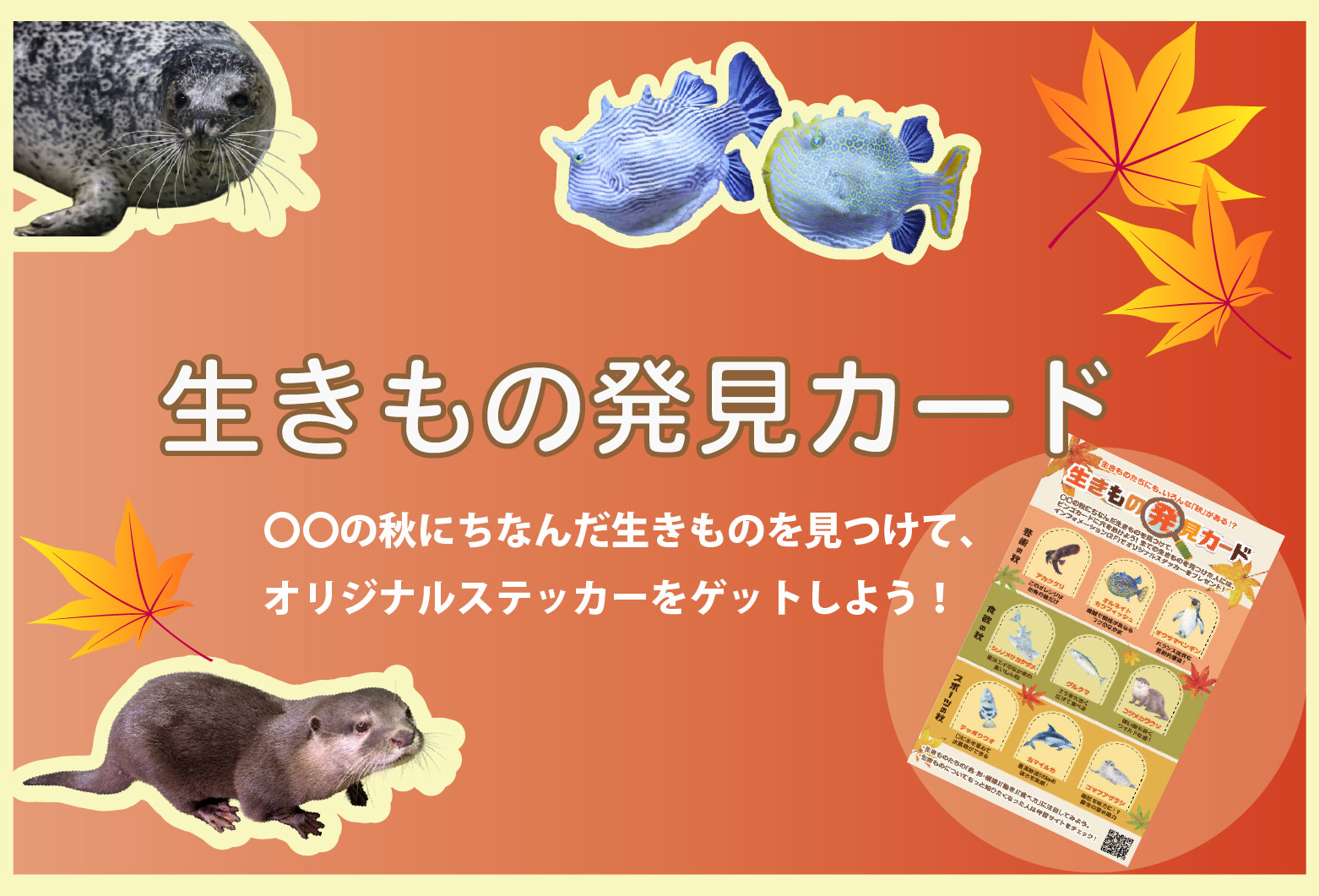
Event summary
Find creatures associated with autumn in [location] and punch holes in your bingo card!
The person who finds all the creatures will receive an original sticker at the Information Desk (2F)!
Target date
2026年10月9日(金)~11月13日(金)
How to purchase
Sales location: Ticket counter (1F)
Amount: 500 yen
About the creatures that appear in Bingo
Autumn of the arts
Red snapper: "This orange color only appears when it's a juvenile!"
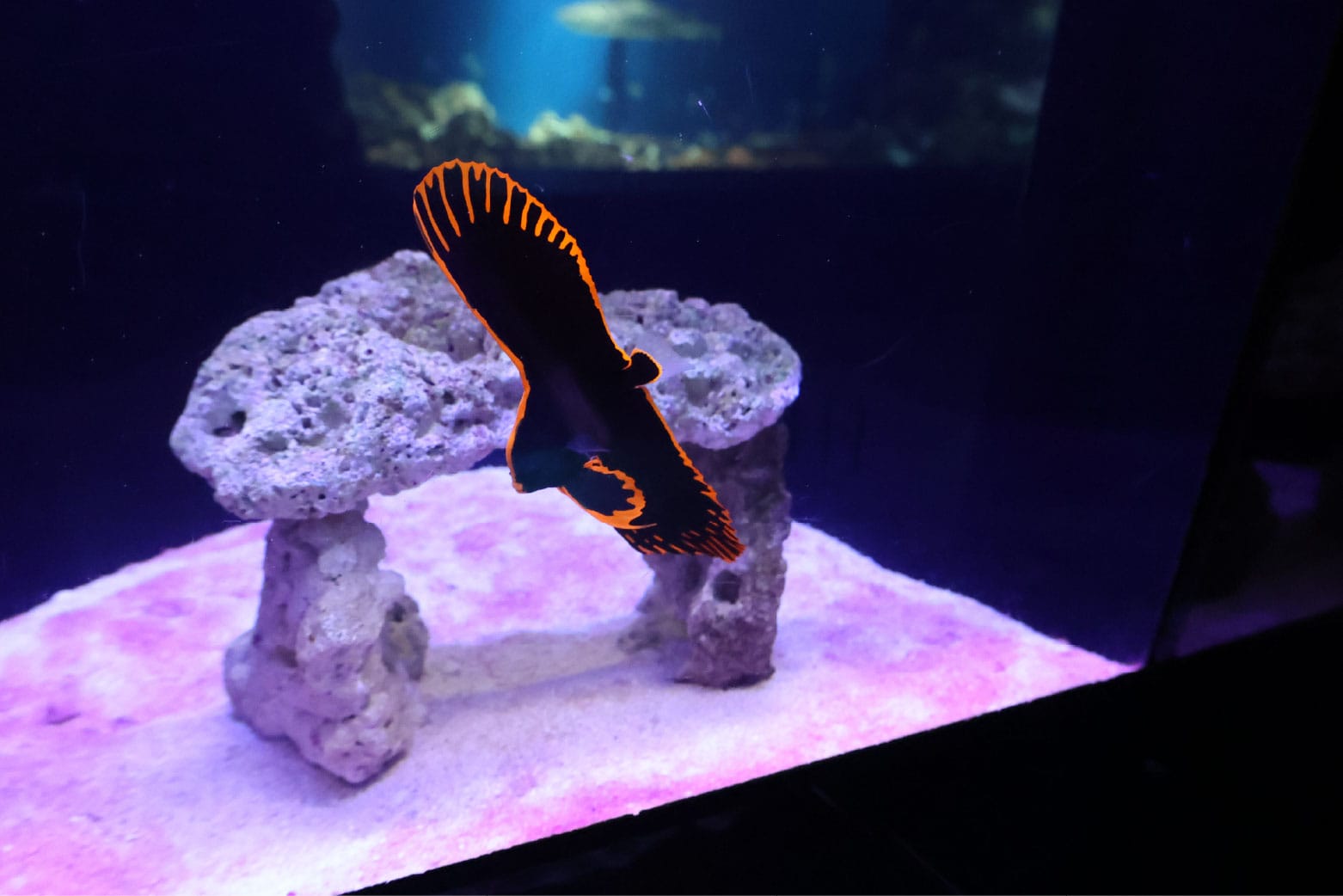
Comments from the animal care staff
The juvenile fish's body color, with its black body and orange edging, is thought to be a form of mimicry, resembling poisonous flatworms and sea slugs. The juveniles live alone in shallow areas of coral reef bays and lagoons, hiding in the shade of rocks, and swim slowly and gracefully. This distinctive body color is only present in the juvenile stage; as they grow, the orange edging gradually disappears, and their body color changes from black to silver, drastically altering their appearance. Classified as a member of the swallowtail fish family, three other closely related species inhabit Japan besides the red swallowtail. While all of these species have silvery bodies as adults, the red swallowtail can be distinguished by its pointed snout.
Exhibition location: Little Paradise
Ornate Cowfish: A type of pufferfish where the patterns differ between males and females.
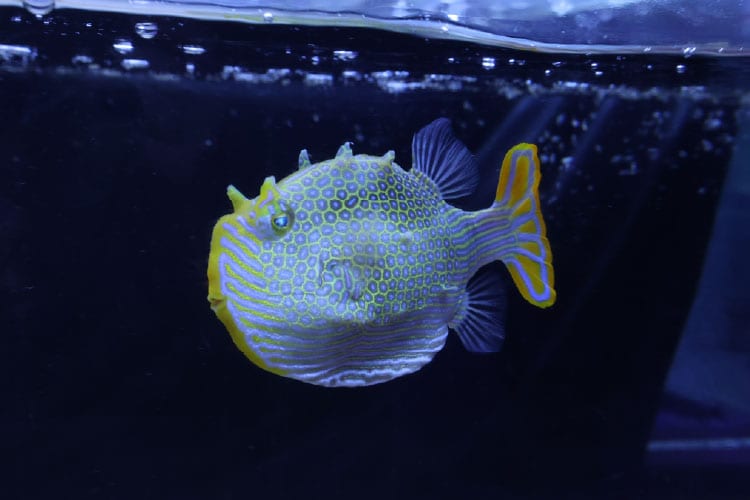
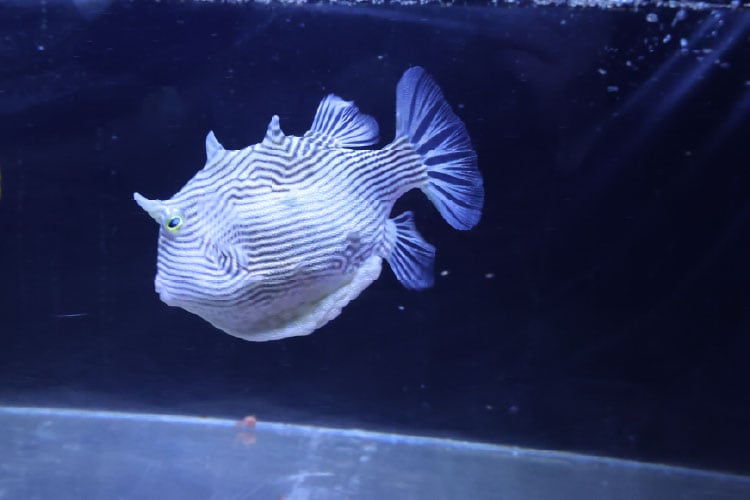
Comments from the animal care staff
This pufferfish, found from southern Australia to Tasmania, belongs to the family Tetraodontidae, which is closely related to boxfish. There are differences in body color between males and females; males have bright patterns all over their bodies, while females are characterized by brown and white lines and swirling patterns. The protrusions on their heads resemble cow horns, hence the name "cowfish." They are very curious and will approach the water's surface when a zookeeper stands near the tank. When searching for food in the sand, they squirt water from their mouths, scattering sand as they search, which can leave the sand in the tank uneven and crater-like.
Exhibition location: Little Paradise
King penguin "An artistic sleeping posture with perfect balance!"
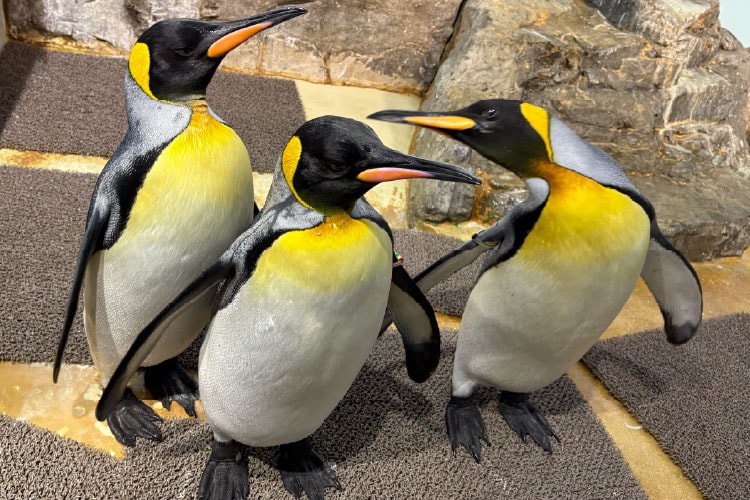
Comments from the animal care staff
King penguin live in relatively cold areas such as the coasts and grasslands of islands around Antarctica. Although most of Penguin bodies are covered in feathers, they protect their feet and beaks, which are not covered in feathers, from the cold. To do this, they sometimes sleep standing on their heels and with their beaks tucked between their wings. The part that looks like a heel is actually called the tarsal bone, which connects the toes to the heel. The way they balance themselves while sleeping in that position is quite artistic. If you observe them carefully, you might be able to see this sleeping posture.
Exhibition location: Wild Street
Autumn is the season for hearty appetites.
The Japanese angelshark: "Actually a gluttonous member of the ray family."
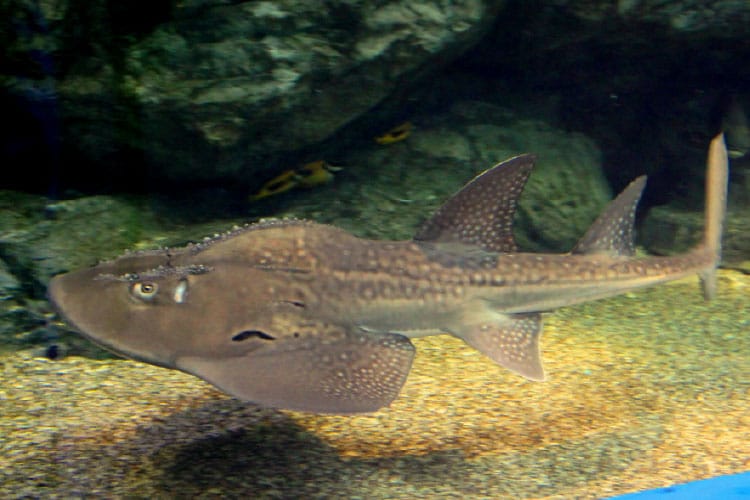
Comments from the animal care staff
The Japanese angelshark (Scomber spp.) has "shark" in its name, and its appearance and swimming style can easily be mistaken for a shark, but it has gill slits on the underside of its body and is classified as a type of ray belonging to the family Scomberidae in the order Myliobatiformes. Taxonomically, it is considered to be closely related to the sawfish, which are kept in the same tank. It is widely distributed in the tropical regions of the Indo-Pacific. It can be seen swimming actively in the tank, and during feeding time, it often pushes aside other individuals in the tank to eat squid, mackerel, and horse mackerel. It has a strong ability to crush food and in the wild, it preys on crustaceans such as shrimp and crabs, as well as shellfish, that hide in the sand.
Exhibition location: Wonder Tube
Mackerel: "They spread their gills wide when they eat."
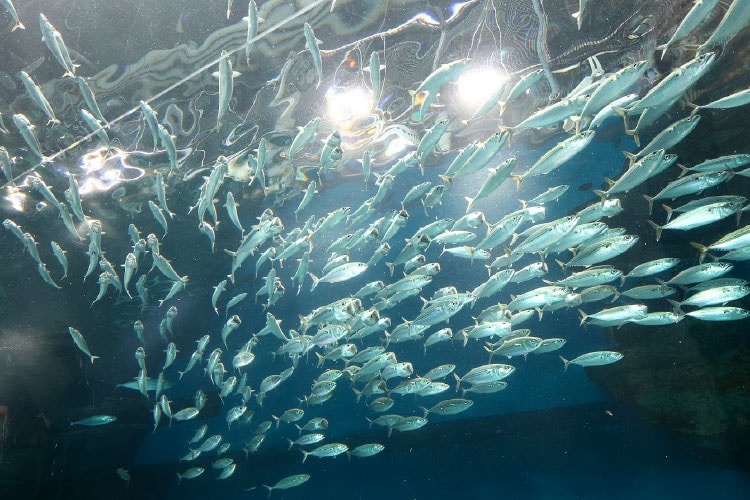
Comments from the animal care staff
This fish belongs to the mackerel family and migrates in schools in the coastal surface waters of tropical and subtropical seas south of Okinawa. In aquariums, it swims just below the surface. It mainly feeds on plankton in the water, swimming with its gills wide open to efficiently catch food, and using organs called gill rakers to filter the food out. At the aqua park, it is fed artificial feed, krill, and mysid shrimp. The gill-spreading behavior can be observed even outside of feeding times, so if you look up at the tank, you may be able to see the gill rakers.
Exhibition location: Wonder Tube
Asian short-clawed otter "Wild teeth that can even crush hard shells!"
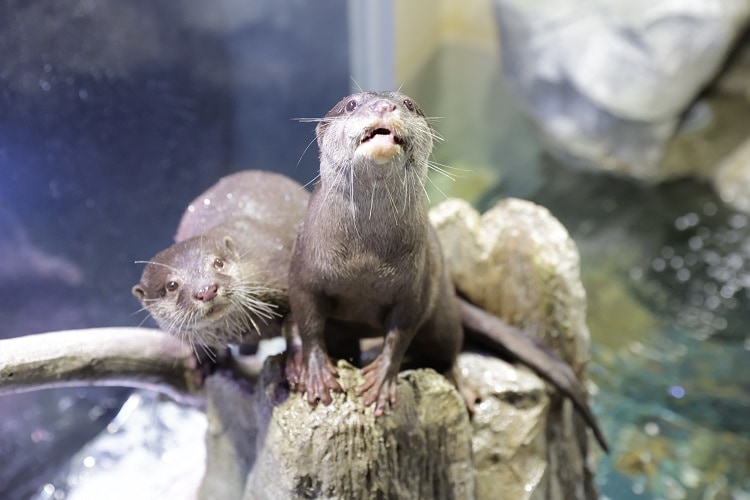
Comments from the animal care staff
In the wild, Asian short-clawed otter feed on crustaceans, mollusks, fish, and sometimes insects, and they are capable of crushing crustaceans and mollusks whole. Their mouths contain sharp canines that are useful for catching prey, as well as molars that can crush hard shells. Among these, the two molars in their upper jaw are particularly large and well-developed, and they have larger teeth than the Eurasian otter, which is twice as large as the Asian Asian short-clawed otter otter.
Asian short-clawed otter actually has a wild side. The Wild Live Viewing provides a more detailed introduction to the Asian Asian short-clawed otter, so be sure to check it out.
Exhibition location: Wild Street
Autumn of sports
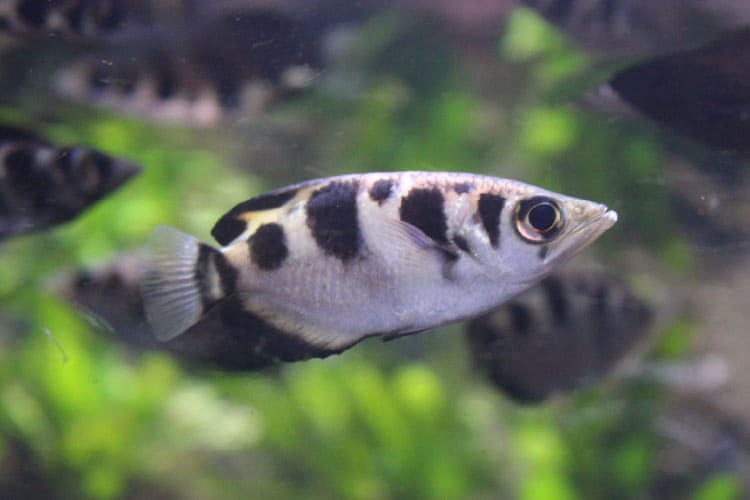
Archerfish: "It can store water in its mouth and make a water gun."
Comments from the animal care staff
Known for its behavior of squirting water from its mouth like a water gun, it is also called the archerfish in English. It inhabits river estuaries and mangrove areas in tropical regions, and has been observed in Japan, including on Iriomote Island. It swims just below the water's surface and preys on small fish, small crustaceans, and insects that perch on mangrove branches. It can calculate the refraction of water at the surface to fire its water gun, and if the target prey is close to the surface, it may leap out of the water to catch the food instead of using its water gun. The range and accuracy of the water gun vary from individual to individual.
Exhibition location: Little Paradise
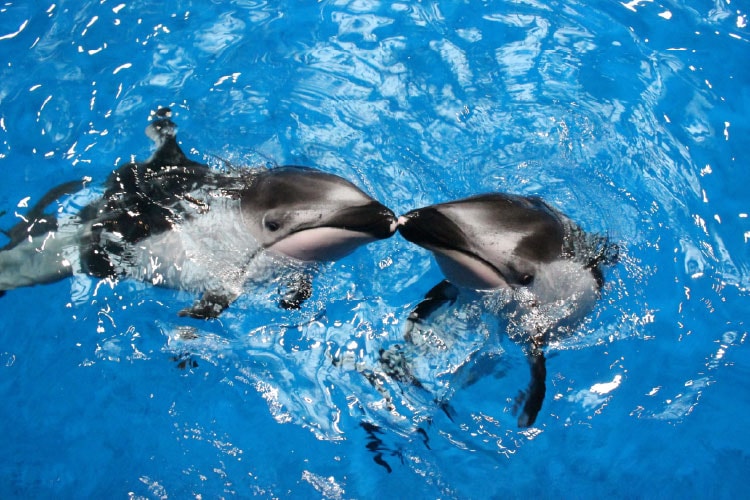
Pacific white-sided dolphin: "I experienced the speed of a top speed of 55 km/h!"
Comments from the animal care staff
The Pacific white-sided Pacific white-sided dolphin, characterized by its black and white two-tone coloring, measures approximately 2-3 meters in length and weighs 100-150 kg. It possesses exceptional athletic abilities, and in the wild, various jumps and acrobatic movements have been observed. It is said to be able to swim at speeds of 50-55 km/h using its powerful tail fin. In performances, you can see many tricks, such as the exhilarating "circuit" and the "tail walk," where it uses the power of its tail fin to lift its body above the water's surface and move forward. Be sure to see a performance in person to experience its incredible physical prowess.
Exhibition location: The Stadium
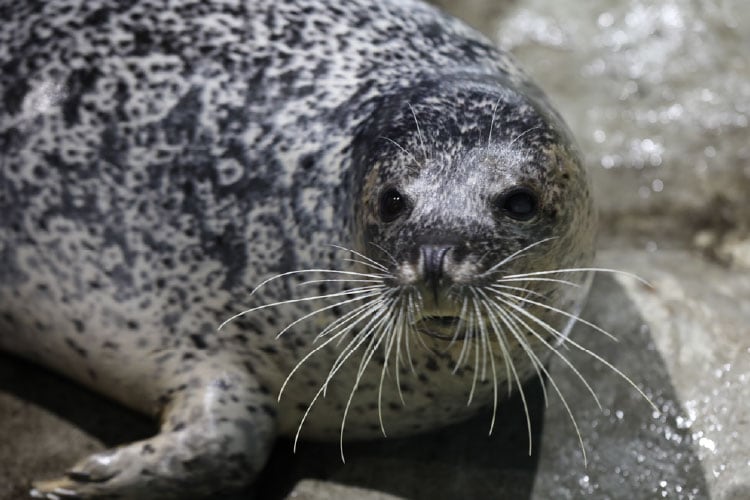
Larga seal "Using their fat to their advantage!? Amazing diving abilities."
Comments from the animal care staff
Seals have a lot of fur all over their bodies. While the fur isn't very long and doesn't offer much insulation, they have a thick layer of fat (over 50%) that protects them from the cold even in the deepest ocean. This is among the best in the animal kingdom! Despite this fat, they are also incredibly skilled divers, able to stay submerged for longer periods than most other marine mammals. For example, Larga seal can hold their breath for about 20 minutes on a single breath. They might be sleeping underwater, so be sure to look for them!
Exhibition location: Wild Street