

Coral staff column
Introducing "Xycoral," a type of coral whose open polyps resemble fireworks.
In the Coral Lab located within the Coral Cafe Bar (1F), one species of coral is selected from the more than 800 known species of coral worldwide and displayed as a "Coral Pick-Up Tank."
We started exhibiting "Coral Family" on Thursday, July 2nd, 2026, so let me introduce you to their fascinating features.
The polyps, or tentacles, are beautiful corals that look like large fireworks when they open up.
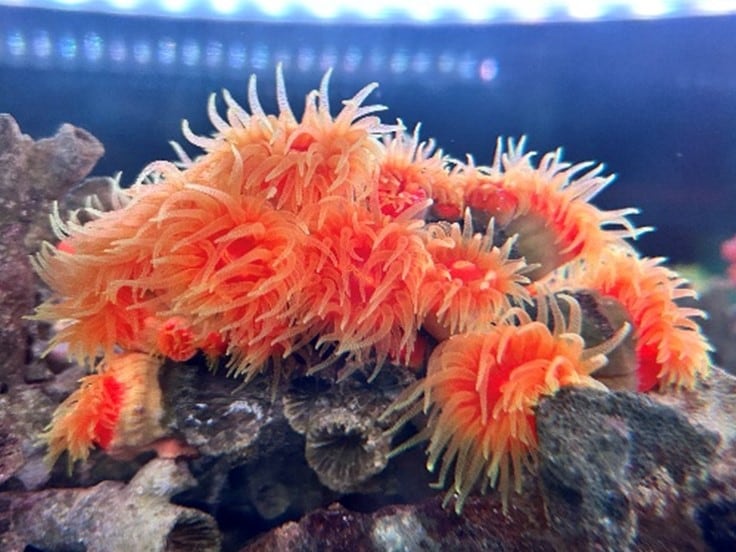
There are two types of corals: photophilic corals and anaerobic corals. Photophilic corals prefer places with plenty of sunlight and obtain some of the energy produced by photosynthesis from zooxanthellae living inside their bodies as nutrients. On the other hand, anaerobic corals, including yellow corals, live in dark places such as under rocks and do not live in symbiosis with zooxanthellae. Therefore, they need to actively hunt for plankton themselves. When hunting, they use their polyps to grasp the food and gradually close the polyps to bring it to their mouth in the center.
At Maxell Aqua Park Shinagawa, the fish are fed mysid shrimp, which are a type of zooplankton.
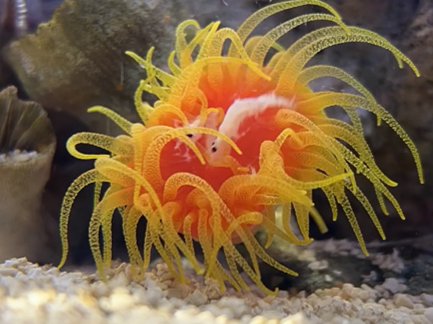
Immediately after feeding with krill
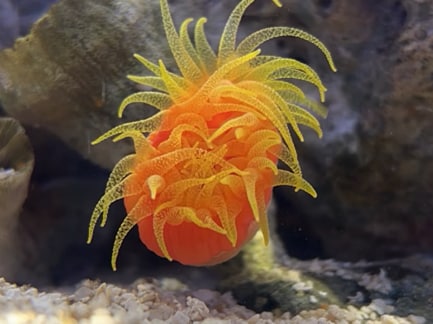
It appears they've started to take it in.
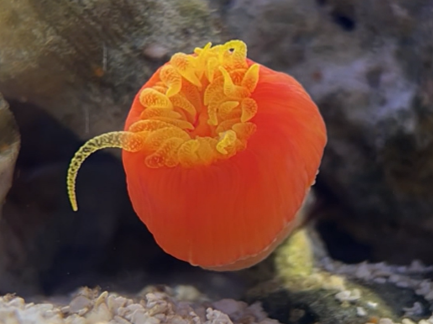
The process of taking it in
Many types of corals, including yellow corals, reproduce through two methods: asexual reproduction and sexual reproduction.
In the tanks where I previously kept the corals, I observed both asexual reproduction, where they divide and small individuals proliferate from the base, and sexual reproduction, where they release planula larvae.
Initially, they were very small, about 2 mm in size, but with feeding they gradually grew and are now about 1 cm in size. Coral Lab also exhibits these growing juvenile corals.
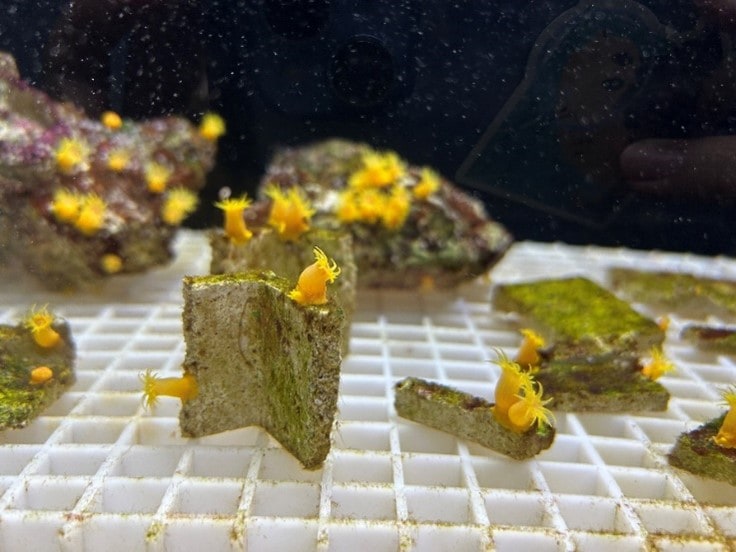
Enjoy the underwater fireworks-like beauty of the yellow coral, perfect for summer.